
How Morocco Became a Leader in Renewable Energy in Africa
Morocco's Energy Challenge
Morocco faced a critical problem in the early 2000s. The country imported over 90% of its energy needs, mostly fossil fuels like coal, oil, and natural gas.
This dependency made Morocco vulnerable to price shocks and supply disruptions. Energy costs consumed a large portion of the national budget.
At the same time, Morocco's economy was growing. The population was increasing. Demand for electricity was rising by about 7% each year.
The government realized it needed a new strategy. Morocco had to reduce imports, lower costs, and secure reliable energy for the future.
The National Energy Strategy
In 2009, Morocco launched an ambitious National Energy Strategy. The plan set clear targets for renewable energy development.
The strategy had three main goals. First, increase energy security by reducing imports. Second, expand access to electricity across the country. Third, protect the environment by cutting carbon emissions.
Morocco committed to generating 42% of its electricity from renewables by 2020. The target was later increased to 52% by 2030.
The government created the Moroccan Agency for Sustainable Energy (MASEN) in 2010. This agency would lead the development of renewable energy projects.
Morocco's Geographic Advantages
Morocco has natural advantages that make renewable energy highly effective. Understanding these advantages explains why the country succeeded.
Abundant Solar Resources
Morocco receives some of the highest levels of solar radiation in the world. The sun shines intensely for over 3,000 hours per year in many regions.
The Sahara Desert covers parts of southern Morocco. These areas are ideal for large-scale solar power plants.
Solar irradiance levels reach 5 to 7 kilowatt-hours per square meter daily. This is among the best conditions globally for solar energy production.
Strong Wind Potential
Morocco's Atlantic coastline experiences consistent, strong winds. These conditions are perfect for wind energy generation.
The coastal regions, particularly near Tangier and Essaouira, have average wind speeds of 9 to 11 meters per second. These speeds support highly efficient wind turbine operation.
Morocco has an estimated wind energy potential of 25,000 megawatts. Only a fraction of this capacity has been developed so far.
Strategic Location
Morocco sits at the crossroads of Africa and Europe. It is separated from Spain by just 14 kilometers at the Strait of Gibraltar.
This proximity creates opportunities for energy trade. Morocco can potentially export electricity to European markets through undersea cables.
The country already has interconnections with Spain and Portugal. These links allow electricity to flow in both directions.
The Noor Ouarzazate Solar Complex
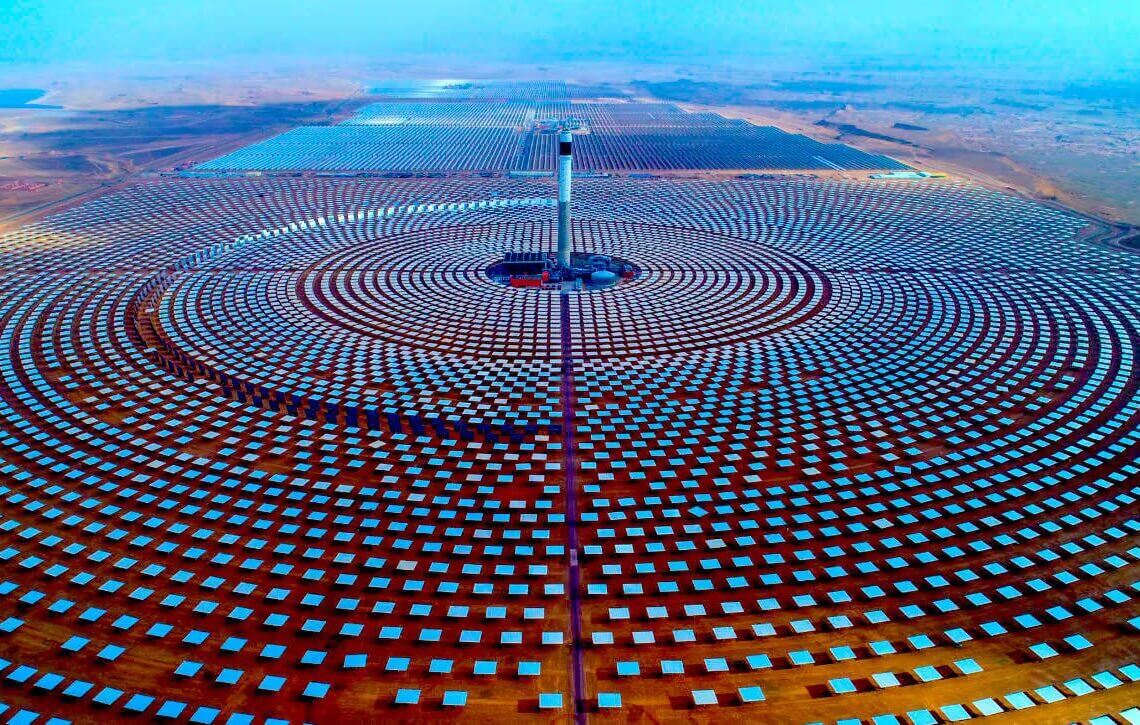
The Noor Ouarzazate Solar Complex represents Morocco's flagship renewable energy project. It is one of the largest concentrated solar power (CSP) plants in the world.
Project Overview
Located near the city of Ouarzazate in central Morocco, the complex sits on 3,000 hectares of semi-arid land. The area was chosen for its exceptional solar conditions.
The project was built in multiple phases between 2013 and 2018. It consists of four separate plants: Noor I, Noor II, Noor III, and Noor IV.
The total capacity of the complex is 580 megawatts. This is enough electricity to power approximately 2 million Moroccan homes.
How Concentrated Solar Power Works
Concentrated solar power uses mirrors to focus sunlight onto a receiver. This is different from traditional solar panels that convert light directly into electricity.
The mirrors, called heliostats, track the sun throughout the day. They reflect and concentrate sunlight onto a central tower or tubes filled with special fluid.
The concentrated heat reaches temperatures above 400 degrees Celsius. This heat creates steam that drives turbines to generate electricity.
One major advantage of CSP is energy storage. The system stores heat in molten salt, allowing electricity generation even after sunset.
Noor I can provide power for up to three hours after dark. Noor II and Noor III can operate for seven to eight hours without sunlight.
Investment and Impact
The Noor Ouarzazate project cost approximately $9 billion USD. Funding came from multiple sources including the World Bank, African Development Bank, and European Investment Bank.
Germany, France, and the European Union provided significant financial support. Private sector partners also invested in the construction and operation.
The complex reduces Morocco's CO2 emissions by an estimated 760,000 tons annually. This is equivalent to removing about 150,000 cars from the road each year.
The project created thousands of construction jobs. It continues to employ hundreds of people for operations and maintenance.
Wind Energy Development
While solar power gets significant attention, wind energy is equally important to Morocco's renewable strategy. The country has developed substantial wind capacity.
Major Wind Farms
Morocco operates several large wind farms along its Atlantic coast. The Tarfaya Wind Farm was one of Africa's largest when completed in 2014.
Located in southern Morocco, Tarfaya has 131 wind turbines with a total capacity of 301 megawatts. It generates enough electricity for 1.5 million people.
The Midelt Wind Farm in eastern Morocco added 210 megawatts of capacity. The Tanger I and Tanger II projects near Tangier contribute another 240 megawatts combined.
Wind Energy Growth
Morocco's installed wind capacity has grown from nearly zero in 2000 to over 1,700 megawatts in 2024. This rapid expansion demonstrates the country's commitment to diversification.
Wind energy now accounts for approximately 15% of Morocco's total electricity generation. This percentage continues to increase with new projects.
The government plans to reach 3,000 megawatts of wind capacity by 2030. Several projects are currently under development to meet this goal.
Hydroelectric Power
Morocco has utilized hydroelectric power for decades. While not new, hydro remains an important part of the renewable energy mix.
The country has over 1,770 megawatts of installed hydroelectric capacity. Major dams include Al Wahda, Bin el Ouidane, and Afourer.
Hydropower provides about 10% of Morocco's electricity. However, output varies depending on rainfall and water availability.
Climate change has affected water resources in recent years. Droughts have reduced hydroelectric production, making solar and wind even more critical.
Policy Framework and Incentives
Morocco's success in renewable energy did not happen by accident. Strong government policies and financial incentives drove the transformation.
Legal and Regulatory Support
Morocco passed Law 13-09 in 2010, which opened the electricity market to private renewable energy producers. This law was crucial for attracting investment.
The legislation established clear rules for independent power producers (IPPs). It defined how private companies could generate and sell electricity.
Feed-in tariffs were introduced to guarantee prices for renewable energy. This reduced investment risk and encouraged project development.
Public-Private Partnerships
Morocco embraced public-private partnerships (PPPs) as the main model for renewable projects. This approach combines government support with private sector efficiency.
MASEN typically owns the land and infrastructure. Private companies build, operate, and maintain the facilities under long-term contracts.
International developers, including companies from Spain, France, Germany, and the UAE, have participated in Moroccan projects. This brings technical expertise and financing.
International Financial Support
Morocco received substantial support from international financial institutions. The World Bank provided over $1 billion for various renewable energy projects.
The African Development Bank, European Investment Bank, and German development bank KfW contributed billions more. This funding made large-scale projects financially viable.
Climate finance mechanisms, including the Clean Technology Fund, provided concessional loans and grants. These reduced the cost of capital for green projects.
Economic and Social Benefits
Morocco's renewable energy transition has created benefits beyond electricity generation. The impacts touch multiple aspects of society and the economy.
Reduced Energy Imports
Renewable energy has significantly reduced Morocco's dependence on imported fossil fuels. The country now imports about 85% of its energy needs, down from over 90%.
This reduction saves hundreds of millions of dollars annually. Money that previously went to fuel imports now stays in the domestic economy.
As renewable capacity continues to grow, import dependence is expected to fall below 80% by 2030. This improves Morocco's trade balance and economic stability.
Job Creation
The renewable energy sector has created tens of thousands of jobs in Morocco. Construction, installation, operations, and maintenance all require workers.
Local manufacturing has also developed. Morocco now produces some components for wind turbines and solar installations domestically.
Training programs have been established to develop skilled workers. Universities and technical schools offer courses in renewable energy engineering.
The International Renewable Energy Agency (IRENA) estimates that Morocco's renewable sector employs over 40,000 people. This number is expected to grow substantially.
Rural Electrification
Morocco achieved nearly 100% electrification by 2020. Renewable energy, particularly solar, played a key role in reaching remote rural areas.
Off-grid solar systems brought electricity to villages far from the main power network. This improved quality of life and created economic opportunities.
Reliable electricity enables rural businesses, schools, and health clinics to operate effectively. It also reduces migration from rural areas to cities.
Technology Transfer and Innovation
International partnerships have brought advanced renewable energy technology to Morocco. Local engineers and technicians have gained valuable knowledge and skills.
Morocco is becoming a regional hub for renewable energy expertise. The country shares its experience with other African nations.
Research institutions in Morocco are conducting studies on energy storage, grid integration, and efficiency improvements. This builds domestic innovation capacity.
Challenges and Obstacles
Despite impressive progress, Morocco faces several challenges in its renewable energy transition. Understanding these obstacles provides a complete picture.
Intermittency and Grid Integration
Solar and wind energy are intermittent sources. They only generate power when the sun shines or the wind blows.
Morocco's electricity grid must balance supply and demand constantly. High renewable penetration requires sophisticated grid management systems.
Energy storage technology is still expensive. Morocco is exploring battery systems and other storage solutions to address this challenge.
Financing Constraints
Large-scale renewable projects require billions of dollars in investment. While Morocco has attracted significant funding, access to capital remains a constraint.
Private investors seek stable returns and manageable risks. Currency fluctuations and policy changes can affect project economics.
Morocco continues to work on improving its investment climate. Streamlining regulations and reducing bureaucracy helps attract more capital.
Water Scarcity
Some concentrated solar power plants require water for cooling and cleaning mirrors. Morocco faces water scarcity in many regions.
This creates tension between energy production and water conservation. Projects must be designed to minimize water use.
Newer solar technologies, like photovoltaic panels, use no water for operation. This makes them more suitable for arid regions.
Social and Environmental Concerns
Large energy projects can affect local communities and ecosystems. Land use for solar and wind farms sometimes conflicts with agricultural or pastoral activities.
Morocco has worked to address these concerns through community consultation and compensation programs. Environmental impact assessments are required for all major projects.
Bird migration routes intersect with some wind farm locations. Careful site selection and turbine design help reduce wildlife impacts.
Regional Leadership and Influence
Morocco's renewable energy success has established the country as a leader in Africa and the Arab world. This leadership role creates new opportunities.
Example for Other Nations
Many African countries face similar energy challenges as Morocco did. They have abundant renewable resources but lack development.
Morocco actively shares its experience through bilateral cooperation and regional forums. Technical experts from Morocco advise other countries on policy and project design.
The African continent has enormous renewable energy potential. Morocco's success demonstrates that this potential can be realized with the right policies and investments.
Energy Export Potential
Morocco is exploring the possibility of exporting electricity to Europe. Undersea cables already connect Morocco to Spain.
Expanding these interconnections could allow Morocco to become a major renewable energy supplier. European countries seek clean energy to meet climate targets.
Green hydrogen production is another export opportunity. Morocco has ideal conditions for producing hydrogen using renewable electricity.
Several pilot projects are underway to develop green hydrogen for export markets. This could become a significant revenue source in the coming decades.
Climate Leadership
Morocco has taken a leadership role in international climate negotiations. The country hosted the COP22 climate conference in 2016.
Morocco was one of the first developing countries to submit ambitious climate commitments. The nationally determined contributions (NDCs) include aggressive renewable energy targets.
This climate leadership enhances Morocco's international reputation. It positions the country as a responsible global actor on environmental issues.
Future Plans and Targets
Morocco continues to expand its renewable energy ambitions. The country has set clear targets for the coming decades.
2030 Renewable Energy Goals
Morocco aims to reach 52% renewable energy capacity by 2030. This breaks down to 20% solar, 20% wind, and 12% hydro.
Achieving this target requires adding approximately 10,000 megawatts of new renewable capacity. Numerous projects are planned or under development.
The government has allocated sites for new solar and wind farms. Competitive bidding processes are being used to select developers.
Noor Midelt Project
The Noor Midelt solar complex is Morocco's next major flagship project. Located in the Midelt region, it will combine photovoltaic and concentrated solar power technology.
The first phase will add 800 megawatts of capacity. This hybrid approach takes advantage of both technologies' strengths.
Noor Midelt will include advanced energy storage systems. This will allow the plant to provide electricity for up to five hours after sunset.
Green Hydrogen Development
Morocco is investing in green hydrogen as part of its energy future. Green hydrogen is produced using renewable electricity to split water molecules.
This hydrogen can be used as a clean fuel for industry, transportation, and heating. It can also be exported to countries seeking clean energy alternatives.
Germany and Morocco signed agreements to cooperate on green hydrogen projects. The Moroccan government estimates potential production capacity of millions of tons annually.
Grid Modernization
Morocco is upgrading its electricity grid to handle higher renewable energy levels. Smart grid technology improves efficiency and reliability.
New transmission lines are being built to connect renewable energy zones to population centers. This infrastructure is essential for the energy transition.
The Office National de l'Électricité et de l'Eau Potable (ONEE) is leading grid modernization efforts. International partners are providing technical and financial support.
Lessons from Morocco's Experience
Morocco's renewable energy success offers valuable lessons for other developing countries. Several factors were critical to the transformation.
Political Commitment
Strong, sustained political commitment from the highest levels of government was essential. King Mohammed VI personally championed the renewable energy vision.
This top-level support ensured that policies remained consistent over many years. It also signaled seriousness to international investors and partners.
Renewable energy was not treated as a side project. It became a central pillar of Morocco's economic development strategy.
Clear Targets and Planning
Morocco set specific, measurable targets with clear timelines. This created accountability and allowed progress to be tracked.
The National Energy Strategy provided a roadmap for development. All stakeholders understood the direction and goals.
Regular updates and adjustments kept the strategy relevant. Morocco adapted plans based on technological advances and changing circumstances.
Leveraging Natural Advantages
Morocco recognized and capitalized on its natural strengths. Abundant sun and wind became valuable national assets.
The country did not try to develop all energy types equally. Resources focused on technologies best suited to local conditions.
Geographic advantages, like proximity to Europe, were incorporated into the strategic vision. This created additional economic opportunities.
International Partnerships
Morocco actively sought international partnerships rather than trying to go it alone. Foreign expertise, technology, and capital accelerated development.
The country created a welcoming environment for international investors. Clear regulations and competitive processes built confidence.
Participation in global climate initiatives provided access to additional funding mechanisms. Morocco benefited from being an early mover on climate action.
Institutional Capacity
Creating MASEN as a dedicated agency was crucial. This institution had the mandate, expertise, and resources to drive projects forward.
MASEN could move faster than traditional government bureaucracy. It operated with commercial efficiency while maintaining public oversight.
Building local expertise through training and technology transfer ensures long-term sustainability. Morocco is not dependent on foreign experts indefinitely.
Comparison with Other African Countries
Understanding Morocco's progress requires context. How does it compare to other African nations pursuing renewable energy?
South Africa
South Africa has significant renewable energy capacity, with over 5,000 megawatts of wind and solar. However, the country still relies heavily on coal for baseload power.
South Africa's renewable energy program faced policy uncertainty and delays. Morocco maintained more consistent support and faster development.
Both countries have excellent renewable resources. South Africa's larger economy and industrial base create different challenges and opportunities.
Egypt
Egypt has made major investments in solar energy, including the Benban Solar Park. This 1,650-megawatt facility is larger than Morocco's Noor Ouarzazate complex.
Egypt has natural gas resources that Morocco lacks. This affects the urgency and economics of the renewable transition.
Both countries aim to become regional energy hubs. Egypt focuses more on natural gas alongside renewables, while Morocco emphasizes green energy exports.
Kenya
Kenya generates over 90% of its electricity from renewable sources, primarily geothermal and hydroelectric power. This is the highest percentage in Africa.
Kenya's geothermal resources in the Rift Valley provide reliable baseload power. Morocco does not have significant geothermal potential.
Kenya's approach emphasizes geothermal development, while Morocco focuses on solar and wind. Both strategies suit their respective natural resources.
Ethiopia
Ethiopia has massive hydroelectric potential and has built several large dams. The Grand Ethiopian Renaissance Dam will be Africa's largest hydroelectric facility.
Hydropower provides most of Ethiopia's electricity. However, droughts can significantly affect generation.
Morocco's more diversified renewable portfolio, including solar and wind, may be more resilient to climate variability than hydropower-dependent systems.
Environmental Impact
Morocco's renewable energy transition has significant environmental implications. Both positive and negative effects deserve consideration.
Carbon Emissions Reduction
Morocco's renewable energy development prevents millions of tons of CO2 emissions annually. As renewable capacity grows, this climate benefit increases.
The country's per capita emissions are relatively low compared to developed nations. Renewables ensure economic growth does not dramatically increase emissions.
Morocco's climate commitments include reducing greenhouse gas emissions by 45.5% by 2030 compared to business-as-usual scenarios. Renewable energy is central to achieving this goal.
Air Quality Improvement
Replacing fossil fuel power plants with renewable energy improves local air quality. Coal and oil combustion produce pollutants that harm human health.
Cities and industrial areas benefit from cleaner electricity generation. This reduces respiratory illnesses and other health problems.
The economic benefits of improved health outcomes add to the value of renewable energy. Healthcare costs decrease when air pollution declines.
Land Use Considerations
Large solar and wind installations require significant land areas. This can conflict with other land uses including agriculture and wildlife habitat.
Morocco generally sites projects in areas with low agricultural value. Desert and semi-arid regions are prioritized for solar development.
Environmental impact assessments help minimize ecosystem disruption. Proper planning ensures renewable projects are developed sustainably.
Water Conservation
Solar photovoltaic and wind energy use virtually no water for operation. This is especially valuable in water-scarce regions.
Morocco's transition reduces water consumption compared to fossil fuel power plants, which require substantial water for cooling.
Even concentrated solar power plants in Morocco use dry cooling systems where possible. This minimizes water use despite higher costs.
Economic Impact and Returns
Renewable energy investments have transformed Morocco's economy in multiple ways. The financial returns extend beyond electricity generation.
Direct Economic Benefits
Morocco has invested over $20 billion in renewable energy infrastructure since 2009. This capital has created assets that will generate returns for decades.
The levelized cost of electricity from new solar and wind projects has fallen dramatically. Renewable energy is now cost-competitive with fossil fuels in Morocco.
Avoiding fuel imports saves Morocco billions of dollars annually. These savings improve the country's current account balance and economic stability.
Industrial Development
Renewable energy has attracted energy-intensive industries to Morocco. Low-cost clean electricity makes the country attractive for manufacturing.
Morocco is developing a green hydrogen industry that requires massive amounts of renewable electricity. This creates a new export industry.
The automotive sector has expanded in Morocco partly due to reliable, affordable energy. Renewable power supports diversification beyond traditional industries.
Tourism and International Image
Morocco's renewable energy leadership enhances its international reputation. The country is seen as innovative and environmentally responsible.
Solar facilities like Noor Ouarzazate have become tourist attractions. Visitors from around the world come to see the impressive installations.
A positive international image helps Morocco attract foreign investment across all sectors, not just energy. The country benefits from a "green" brand.
Technical Innovations
Morocco has implemented several technical innovations in its renewable energy sector. These advances improve efficiency and effectiveness.
Hybrid Solar Technology
The Noor Midelt project combines photovoltaic and concentrated solar power in one facility. This hybrid approach optimizes performance throughout the day.
Photovoltaic panels generate efficiently during peak sunlight hours. CSP with storage provides power during evening and night hours.
This combination provides more consistent electricity output than either technology alone. It reduces the need for backup fossil fuel generation.
Advanced Energy Storage
Morocco is implementing various energy storage technologies. Molten salt thermal storage at CSP plants allows electricity generation after sunset.
Battery storage systems are being piloted for photovoltaic installations. These systems store excess solar energy for use during peak demand periods.
Pumped hydro storage is being explored in mountainous regions. Water is pumped uphill during low-demand periods and released to generate power when needed.
Smart Grid Development
Morocco is investing in smart grid technology to manage variable renewable energy. Advanced sensors, controls, and software optimize electricity distribution.
Smart meters are being deployed across the country. These devices provide real-time data on electricity consumption and grid conditions.
Demand response programs allow utilities to manage peak loads more effectively. Industrial and commercial customers adjust usage based on grid conditions.
Forecasting Systems
Accurate forecasting of solar and wind resources is critical for grid management. Morocco has implemented sophisticated weather and generation forecasting systems.
These systems predict renewable energy output hours and days in advance. Grid operators can plan accordingly and maintain system stability.
Satellite data, ground sensors, and artificial intelligence combine to improve forecasting accuracy. Prediction errors have decreased significantly as technology improves.
Social and Cultural Dimensions
Renewable energy development affects Moroccan society beyond economics and environment. Social and cultural factors influence success.
Public Awareness and Support
The Moroccan government has promoted renewable energy awareness through education campaigns. Citizens understand the importance of the energy transition.
Schools incorporate renewable energy topics into curricula. Young Moroccans grow up with knowledge of solar and wind technology.
Public support for renewable energy remains high. Surveys show Moroccans favor clean energy development over fossil fuels.
Community Engagement
Successful projects involve local communities from the planning stages. Consultation processes allow residents to voice concerns and suggestions.
Some projects include community benefit programs. Local residents receive priority for employment or access to electricity at reduced rates.
Respecting local land rights and customs is essential. Projects that ignore community concerns often face opposition and delays.
Women in Renewable Energy
Morocco has made efforts to include women in the renewable energy sector. Training programs specifically target women for technical roles.
Women work in manufacturing, installation, operations, and management positions. This challenges traditional gender roles in some communities.
Increasing female participation expands the talent pool and promotes social development. Women bring diverse perspectives to project planning and implementation.
Future Challenges and Opportunities
Looking ahead, Morocco faces both challenges and opportunities in continuing its renewable energy journey.
Grid Stability with High Renewables
As renewable energy reaches 50% or more of generation, maintaining grid stability becomes more complex. Variable output from solar and wind must be balanced continuously.
Morocco will need to invest heavily in storage, grid infrastructure, and flexible backup generation. These investments are expensive but necessary.
Regional grid interconnections with Europe and neighboring African countries could help balance supply and demand. Electricity can be exported when Morocco has surplus and imported when needed.
Financing the Next Phase
Morocco has successfully financed the first wave of projects. Continuing the build-out requires sustained investment of tens of billions of dollars.
International climate finance may become more competitive as many countries pursue renewable energy. Morocco must maintain its attractiveness to investors.
Developing domestic financial capacity would reduce dependence on foreign capital. Local banks and capital markets need to support renewable projects.
Technology Evolution
Renewable energy technology continues to evolve rapidly. Morocco must stay current to remain competitive and efficient.
Next-generation solar cells, larger wind turbines, and better batteries offer improved performance and lower costs. Adopting these technologies quickly provides advantages.
Morocco's research institutions and industry partnerships need to keep pace with global innovation. Technology transfer and local adaptation are ongoing processes.
Green Hydrogen Scale-Up
Green hydrogen presents a major opportunity for Morocco. However, scaling from pilot projects to industrial production requires massive investment.
International demand for green hydrogen is uncertain. Morocco is betting that European and global markets will materialize as promised.
Building the necessary infrastructure for hydrogen production, storage, and export is a huge undertaking. Success could transform Morocco's economy; failure could waste resources.
Climate Change Adaptation
Ironically, climate change threatens Morocco's renewable energy production. Changing weather patterns may affect wind and solar resources.
Droughts reduce hydroelectric output and water availability for concentrated solar power plants. More frequent extreme weather can damage installations.
Morocco must design resilient systems that perform well under changing climate conditions. Diversification across technologies and locations reduces vulnerability.
Global Significance
Morocco's renewable energy transformation has implications beyond the country's borders. The global community watches and learns from Morocco's experience.
Demonstrating Developing Country Potential
Morocco proves that developing countries can lead in renewable energy. The transformation did not require waiting for developed country support.
This example encourages other nations to pursue ambitious clean energy goals. If Morocco succeeded, other countries with similar resources can too.
The global energy transition requires participation from all nations. Morocco shows that middle-income countries can be leaders, not just followers.
Contributing to Global Climate Goals
Morocco's emissions reductions contribute to global efforts to limit climate change. Every ton of CO2 avoided matters for planetary climate stability.
By 2030, Morocco's renewable energy will prevent approximately 10 million tons of CO2 emissions annually. This is a meaningful contribution from a modest-sized economy.
Morocco's climate leadership encourages more ambitious commitments from other countries. International climate negotiations benefit from positive examples.
Knowledge Sharing and South-South Cooperation
Morocco actively shares its renewable energy expertise with other developing countries. South-South cooperation helps accelerate the global transition.
African, Middle Eastern, and Asian countries learn from Morocco's successes and challenges. This knowledge transfer avoids duplicating mistakes and speeds up development.
MASEN and other Moroccan institutions provide technical assistance to foreign governments and companies. This builds Morocco's influence and fosters international partnerships.
Conclusion
Morocco's emergence as Africa's renewable energy leader resulted from strategic vision, consistent policy, natural advantages, and international cooperation.
The country transformed its energy system from 90% import-dependent to generating over 40% of electricity from domestic renewable sources. This happened in less than 15 years.
Major projects like the Noor Ouarzazate Solar Complex demonstrate what determined action can achieve. Morocco built world-class infrastructure that generates clean energy and creates economic value.
Challenges remain, including grid integration, financing, and climate adaptation. However, Morocco has proven its ability to overcome obstacles through planning and partnership.
The country's experience offers valuable lessons for other nations pursuing renewable energy. Political commitment, clear targets, institutional capacity, and leveraging natural advantages are critical success factors.
As Morocco continues toward its 2030 goals and explores green hydrogen opportunities, it maintains leadership in Africa's energy transition. The country serves as both an example and a partner for global clean energy development.
Morocco's renewable energy story is not finished. It is an ongoing journey toward greater energy independence, economic prosperity, and environmental sustainability.
.jpg)
.jpg)
.jpeg)
.avif)
.jpg)